The Mise en scène: of Jojo Rabbit
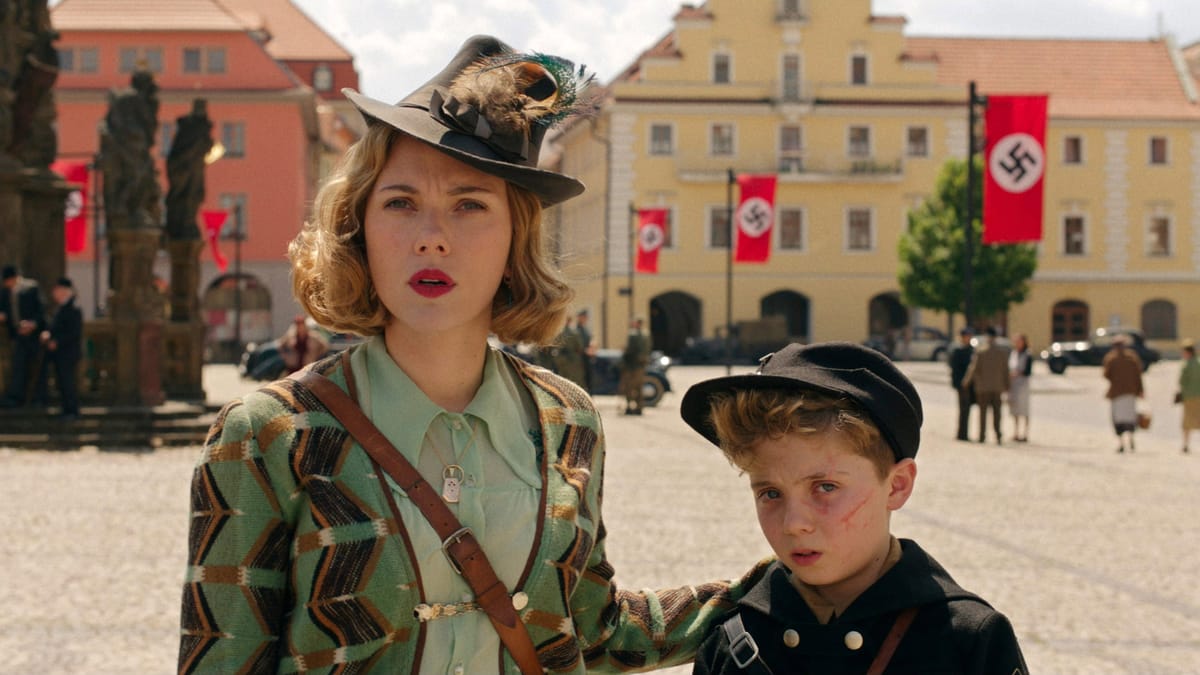
Among films that do not get the appreciation they deserve, Taika Waititi’s 2019 film Jojo Rabbit is certainly one of them. Jojo Rabbit falls into the category of comedy, but in a sea of slapstick and rom-coms, Jojo shows us that a comedy can have heart as well as tackle difficult, emotional themes meaningfully and thought-provokingly. Through its use of mise en scène, Taika Waititi’s Jojo Rabbit demonstrates that comedy can tackle emotional and difficult themes meaningfully.
The story of Jojo Rabbit follows the life of a young boy named Jojo Betzler. Jojo is an 11-year-old boy growing up in Nazi Germany. Like many other children Jojo is consumed by the propaganda of Hitler’s regime. In stark contrast his mother, Rosie, is anti-Party and anti-war. The film follows Jojo as he learns from his mother and a young Jewish girl, Elsa, the meaning of love and compassion, as well as eventually breaking free from the control of Nazi ideology.
The example that most stands out to illustrate Taika Waititi’s artful use of mise en scène is the tonal shift when Jojo finds his mother dead, hanged in the town square for her crime of disloyalty to the Nazi Party. This scene uses set design, props, composition, and space to convey the emotional magnitude of the scene. Looking at each one, we can see how these themes are conveyed nonverbally to the audience.
The scene begins with Jojo walking down the street of his German village (Waititi, 2019, 01:16:38). This is one of the first scenes we see taking place in winter. Up to this point, the film has been bright and colorful; now it appears washed out, with all the colorful buildings feeling muted and cold. Behind Jojo, two soldiers are setting up barbed wire barricades, showing the war is coming to Jojo’s world. Above him, hanging over the buildings and draped across the streets, are Nazi flags. Height plays a significant role throughout the film, especially height in relation to Jojo. This could be showing us how the Nazi ideology still looms over him. Although this scene takes place later in the film, as Jojo is starting to break free from his ideology, the regime is still there even if Jojo is freed. As the scene plays out, gentle, contemplative music is playing—A Butterfly's Wings by Michael Giacchino.
The scene continues with Jojo stopping to try and fix some propaganda posters that have started to fall off the wall (Waititi, 2019, 01:17:05), illustrating how he is still attached to the ideology. He still cares enough to try to make sure the posters praising Hitler are visible. He stops as he is distracted by a bright blue butterfly. Butterflies, established earlier in the film, are a symbol of freedom and love, and act as a symbol of Jojo’s mother. Jojo follows the butterfly into the town square. The camera is low, cutting between a downward shot looking at the butterfly flying close to the ground and looking up at Jojo as he follows it. This shot keeps the ever-present Nazi flags in frame, further illustrating even if Jojo focuses on the butterfly meaning compassion behind him out of view the regime remains. There is no true freedom from the Party.
Jojo follows the butterfly into the center of the town square, bending down to get a closer look. As he stands, the camera pans up with him. As the camera moves, lowering into the frame, we see feet suspended in the air. The feet hang at approximately eye level with Jojo. The bright red shoes are a giveaway—we know this is Jojo’s mother. The significance of the shoes have symbolic meaning in the film, we've seen two other instances of these shoes being at eye level with Jojo. Both times it was when his mother was offering him support, trying to subtly guide him in the right direction. This time we know it's different; the juxtaposition of this image not only shows the tone of the scene has changed but also the entire film from this point. To add to the tension, not only do we see Rosie’s lifeless hanging feet before Jojo does, but the music stops. The film is eerily silent, as if the audience is being given a moment to gasp at the image before us.
Jojo turns and pauses. The shot hangs for just a second before cutting to a close-up of his face. He begins to breathe heavily before looking up. The camera stays glued to Jojo’s face with the background out of focus. Like the whole world has disappeared and the only thing that exists is Jojo’s emotional expression. We cut to behind Jojo as he jumps forward to hug his mother’s legs. He stops for a moment and tries to tie his mother’s shoelace, but he can't, because he doesn't know how to tie shoes. The concept around Jojo tying shoes is symbolically attached to his growth. In short, Jojo not being able to tie his mother’s shoes tells us he has not finished growing. He hasn't taken his mother’s lessons to heart and still hasn't learned compassion—he is still indoctrinated.
The scene ends with Jojo sitting on the floor of the square looking up at his mother (Waititi, 2019, 01:18:45). The camera cuts to the rooftops of the surrounding buildings. The buildings of the square, once colorful, now draped in the pale hue of winter. The once playful rooftop dormers now appear eerily similar to eyes staring down at Jojo, watching him, like the watchful gaze of the Nazi Party, waiting for him to make the same “mistake” as his mother.
The scene illustrates the stark tonal change of the film's third act. What was once a vibrant, sunny, absurd comedy now has a more somber, realistic, and emotional tone. Through Waititi's use of music, set design, props, and composition, he makes this shift feel natural and meaningful, as well as conveying the serious themes the film touches on. When Jojo Rabbit was first released, I remember a lot of people shied away from it, thinking it was making light of the serious setting it takes place in. This may be the reason it seems so underappreciated. I think if more people gave it a chance and saw how the film offers so much more than just a comedy about Hitler, it would receive the appreciation it deserves.


